The Mandela Effect: Why You Remember It Wrong
Did you know that about 70% of people reported false memories at some point in their lives? That’s a staggering number!
Executive Summary / Key Takeaways
Okay, so imagine this: you’re chatting with friends, and someone confidently says, 'Remember when Nelson Mandela died in prison in the 1980s?' Everyone nods, but wait—he actually passed away in 2013. What just happened? Welcome to the wild world of the Mandela Effect.
What Exactly Is the Mandela Effect?
Collective Memory Glitches
70%
People reporting false memories
30%
People who trust their memories
Source: Psychology Today
The Mandela Effect describes a situation where a large group of people remembers an event or detail differently than how it actually happened. It’s named after Nelson Mandela, who many believed died in prison during the 1980s, despite being released and living until 2013.
This phenomenon isn’t just about one person’s faulty memory. It’s about collective misremembering. Think about it: you and your friends all remember the same thing, but it’s wrong. It’s like a group of people playing a game of telephone, where the original message gets distorted as it passes along.
Some popular examples include:
- The Berenstain Bears vs. The Berenstein Bears
- “Luke, I am your father” vs. “No, I am your father” from Star Wars
- The Monopoly Man having a monocle (he doesn’t!)
These examples make you wonder, right? How can so many people get it wrong? But wait—that’s not even the crazy part.
How Did the Mandela Effect Start?
The term 'Mandela Effect' was coined by Fiona Broome in 2009 after she discovered that she, along with many others, falsely remembered Nelson Mandela dying in prison. This sparked a discussion about how our memories can be so unreliable.
But let’s rewind a bit. Why do we misremember things? It turns out, our brains are wired to fill in gaps. When we encounter information, our minds create a narrative, often blending facts with our own experiences. It’s like when you watch a movie and later recall it as if you lived it.
Psychologists suggest several reasons for the Mandela Effect:
- False Memories: Our brains can create memories that feel real but never happened.
- Social Reinforcement: When others share the same incorrect memory, it strengthens your belief in it.
- Misinformation Effect: Exposure to incorrect information can alter your memory of an event.
So, it’s not just you. It’s a collective brain glitch! But wait—there’s more.
What Lies Beneath the Mandela Effect?
Key Events in the Mandela Effect
2009
Fiona Broome coins the term
2013
Nelson Mandela passes away
Here’s where it gets really interesting. Some people believe the Mandela Effect hints at alternate realities or parallel universes. What if, in another universe, Nelson Mandela really did die in prison? This theory, while not scientifically backed, adds a layer of intrigue to the conversation.
Think about it: if our memories can be so easily manipulated, what else could be happening around us? Could our perceptions of reality be just that—perceptions? This idea has sparked discussions in both psychology and physics.
Moreover, the Mandela Effect challenges our understanding of truth. If a significant number of people can remember something incorrectly, does it make it true in a way? It’s like a collective dream where everyone believes in the same false narrative.
Here’s the part that gets me: the Mandela Effect isn’t just a quirky phenomenon; it’s a window into the complexities of human memory and consciousness. It forces us to question what we believe to be true. But wait—there’s still more to uncover.
How Does the Mandela Effect Impact Culture?
Key Figures in Memory Research
1
Fiona Broome, coined the term
2
Major psychological theories
5
Popular examples of the effect
3
Key researchers in memory studies
The Mandela Effect has seeped into popular culture, influencing everything from memes to conspiracy theories. It’s not just a psychological curiosity; it’s a cultural phenomenon that reflects our collective psyche.
Take social media, for example. Platforms like Twitter and Reddit are buzzing with discussions about shared false memories, creating a sense of community around these experiences. This interaction amplifies the effect, as people validate each other’s memories, reinforcing the falsehood.
Moreover, the Mandela Effect has inspired countless YouTube videos and podcasts, where creators explore these memory glitches. It’s like a rabbit hole you can fall into, with each twist revealing more bizarre examples.
But here’s the kicker: the Mandela Effect challenges our trust in media and information. If we can’t even trust our memories, how can we trust what we read or see? It’s a reminder to question everything, to dig deeper, and to remain curious.
And that’s what makes the Mandela Effect so captivating—it’s not just about remembering things wrong; it’s about exploring the very nature of reality itself.
Popular Mandela Effect Examples
| Example | Common Misremembering |
|---|---|
| Berenstain Bears | Berenstein Bears |
| Star Wars Quote | Luke, I am your father |
| Monopoly Man | Has a monocle |
| Fruit of the Loom | Has a cornucopia |
| Oscar Meyer | Oscar Mayer |
Frequently Asked intel
What causes the Mandela Effect?
The Mandela Effect is caused by a combination of false memories, social reinforcement, and misinformation.
Are there theories about alternate realities related to the Mandela Effect?
Yes, some people theorize that the Mandela Effect suggests the existence of parallel universes.
How can I identify a Mandela Effect?
Look for widely held false memories or discrepancies in popular culture references.
Dig deeper into the rabbit hole
Verified Data Sources
The Tadpoles of IC 410
Astrophysics Data System
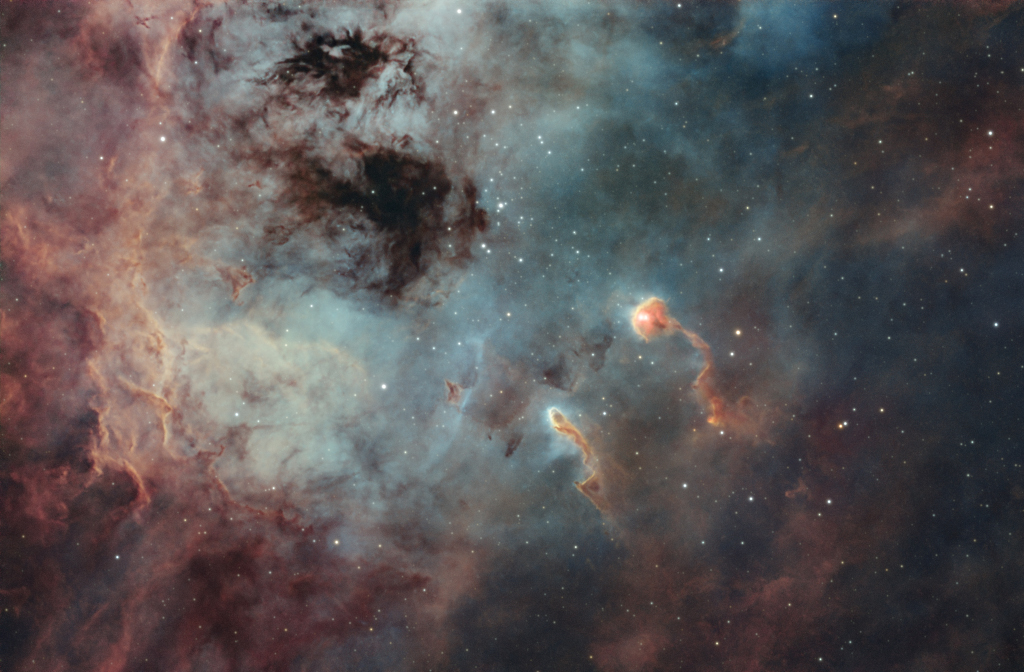
"This telescopic close-up shows off the central regions of otherwise faint emission nebula IC 410, captured under backyard skies. Presented in a Hubble color palette, the image combines visible broadband and narrowband data with data from the near-infrared. Below and right of center are two remarkable inhabitants of the interstellar pond of gas and dust. the Tadpoles of IC 410. Partly obscured by foreground dust, the nebula itself surrounds NGC 1893, a young galactic cluster of stars. Formed in the interstellar cloud a mere 4 million years ago, the intensely hot, bright cluster stars energize the glowing gas. But the cosmic tadpoles themselves are composed of denser cooler gas and dust. Around 10 light-years long they are likely sites of ongoing star formation. Sculpted by stellar winds and radiation their heads are outlined by bright ridges of ionized gas while their tails trail away from the cluster's central young stars. IC 410 lies some 10,000 light-years away, toward the nebula-rich constellation Auriga."
Recent Intel & Headlines
Cross-Network News Feed
Mandela effect | Examples, Definition, & Origin - Britannica
What Is the Mandela Effect? - Verywell Mind
These Disney Movie Mandela Effects Are Convincing Me That We're Living In An Alternate Timeline - BuzzFeed
Global headlines indexed via Google News RSS Search Protocol