The 300-Millisecond Lie Your Brain Tells You Every Day
The 300-millisecond gap between your brain deciding and you becoming aware of the decision is about the same time it takes for sound to travel the length of a football field.
Executive Summary / Key Takeaways
You just decided to read this sentence. Or did you?
Your Brain Decides Before You Know It
The Decision Gap
300ms
Brain decides before awareness
40x
Faster than conscious thought
compared to reaction time
Based on Libet experiments
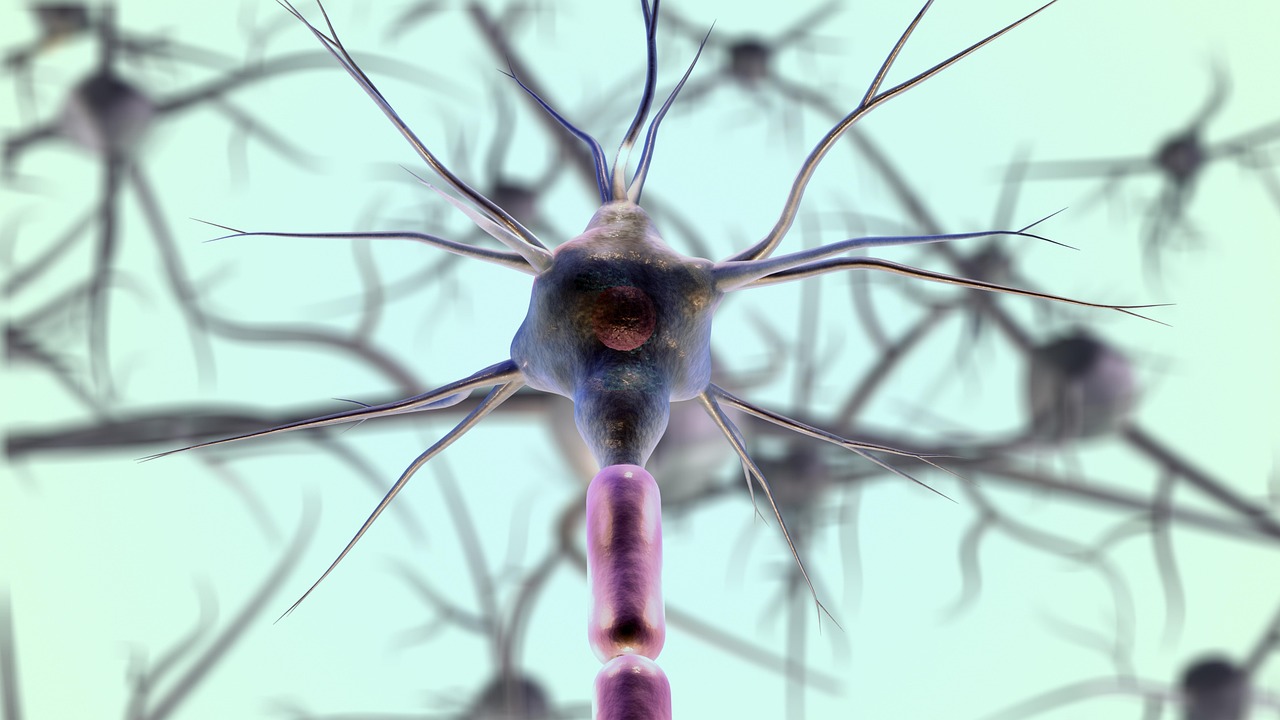
In the 1980s, a neuroscientist named Benjamin Libet hooked people up to EEG machines and asked them to make a simple choice: flex your wrist whenever you feel like it.
He told them to note the exact moment they decided to move.
Here's what he found: their brains showed activity in the motor cortex—the part that controls movement—about 300 milliseconds before they reported making the conscious decision.
Think about that for a second.
Your brain starts the process of moving before you're even aware you've decided to move.
It's like your conscious mind is watching a movie of your life, but the film has already been shot and edited. You're just experiencing the playback.
And this isn't some weird lab trick. This happens with everything from choosing what to eat for lunch to deciding whether to speak up in a meeting.
Your brain makes the call, then tells you a story about how you made the choice.
That story feels like free will.
But it's really just really good narration.
The Slot Machine in Your Mind
Conscious vs Subconscious Processing
What you're aware of
Background processing
Neuroscience estimates
Okay, so your brain's timing is off. But there's another layer.
In the 1970s, psychologist Ellen Langer noticed something strange about people playing lotteries.
She ran an experiment where people could choose their own lottery ticket or were given one randomly.
Later, she offered to buy back their tickets.
The people who chose their own tickets wanted more money for them.
Even though every ticket had exactly the same chance of winning.
She called this the illusion of control—we think we have more influence over random events than we actually do.
And this isn't just about gambling.
You do this every time you think your lucky socks help your team win, or when you press the elevator button harder as if that makes it come faster.
Your brain creates a cause-and-effect story where there isn't one.
It connects your action to an outcome and says 'See? You made that happen.'
Even when you didn't.
This illusion is so powerful it actually changes how you experience reality. It makes random events feel intentional. It makes coincidence feel like choice.
And it's constantly running in the background, stitching together a narrative where you're the main character making things happen.
When really, you're often just along for the ride.
Why Your Past Is Writing Your Future
How We Discovered the Illusion
1975
Illusion of Control
Ellen Langer's lottery experiments
1983
The 300ms Gap
Libet's wrist-flex experiments
2008
Predictive Brain
fMRI shows decisions before awareness
Key psychological discoveries
Here's where it gets even weirder.
Your brain isn't just making up stories about the present. It's using your entire past to predict your future.
Every experience you've ever had—every conversation, every success, every failure—gets stored in neural pathways.
When you face a new situation, your brain doesn't start from scratch.
It runs through those old patterns and says 'Based on everything that's happened before, here's what we should do now.'
You feel like you're weighing options.
But really, you're just accessing memories.
This is why people often make the same mistakes over and over. Why they choose the same type of partner. Why they react to criticism the same way they did when they were twelve.
Your brain is following well-worn paths, then telling you it's exploring new territory.
And those paths aren't just personal. They're cultural too.
Think about how many of your 'choices' are actually just what everyone around you is doing. What you wear. What you eat. What career path seems normal.
You feel like you're choosing freely, but you're swimming in a sea of expectations you didn't create.
This is where things like subconscious biases come in—those automatic preferences you don't even know you have that guide your decisions before you're aware of them.
Your brain presents these predetermined paths as fresh choices.
And you believe it.
The 90% You Never See
The Choice Machinery
90%
Decisions are subconscious
Before you're aware
275,000x
Subconscious advantage
More processing power
7
Major biases
That create illusion
100%
Of people experience it
Universal phenomenon
Psychological research
Here's the number that changes everything: your conscious mind processes about 40 bits of information per second.
Your subconscious? Eleven million.
Eleven million.
That means for every one thing you're aware of thinking about, there are 275,000 things happening in the background that you never see.
Your subconscious is scanning the room for threats before you notice you're uncomfortable.
It's reading micro-expressions on people's faces before you consciously decide if you trust them.
It's pulling up memories and associations you forgot you had.
And all of this is feeding into what feels like your conscious decisions.
When you 'decide' you don't like someone within five seconds of meeting them, that's not a conscious choice.
That's your subconscious running eleven million calculations and delivering you a verdict.
Your conscious mind just takes credit for the work.
This is why first impressions are so powerful—and so often right. Your brain has done the math before you even know there's a problem to solve.
And this happens with everything. What music you like. What food tastes good. Who you're attracted to.
Your conscious mind gets the final report, not the raw data.
It's like being the CEO of a company where you only see the quarterly summaries, not the daily operations.
You feel like you're running the show.
But most of the work happens on floors you never visit.
What If Choice Is Just Good Editing?
What's Really Happening
Your brain decides, then tells you a story
Consciousness narrates, doesn't initiate
Past experiences predict future 'choices'
Neural pathways determine responses
Current neuroscience understanding
So here's the uncomfortable question: if your brain decides before you know it, and uses your past to predict your future, and processes millions of things you never see...
What's actually left for 'you' to choose?
Maybe nothing.
Or maybe everything.
Because here's the twist: knowing about the illusion doesn't break it.
You still feel like you're choosing. You still experience that moment of decision.
And that experience is real, even if the mechanics behind it aren't what you thought.
It's like finding out how a magic trick works. The rabbit was in the hat the whole time. The cards were marked. The assistant was in on it.
But the wonder you felt watching it? That was real.
The illusion of free will might be exactly that—an illusion.
But it's an illusion that feels absolutely real every single day.
And maybe that's enough.
Maybe the feeling of choice is what matters, not the machinery behind it.
Or maybe understanding the machinery changes how you live.
When you realize how much of your 'decision' to eat that cookie was actually your brain responding to an advertisement you saw three hours ago, or a childhood memory of baking with your grandmother, or your blood sugar levels...
It changes things.
You start to see the strings.
And seeing the strings is the first step to maybe, just maybe, pulling a few of them yourself.
Even if the pulling was predetermined too.
This connects to bigger questions about what gives life meaning when our choices might not be as free as we think.
How Different Factors Create the Illusion
| Factor | What It Does | Daily Example |
|---|---|---|
| Neural Timing | Brain initiates action before awareness | Reaching for phone before thinking 'I should check that' |
| Illusion of Control | Connects actions to random outcomes | Thinking your lucky shirt helps your team win |
| Subconscious Processing | Makes decisions using background data | Instant dislike of someone based on subtle cues |
| Cultural Scripts | Provides ready-made 'choices' | Career paths that feel 'normal' in your community |
| Memory Pathways | Uses past experiences to predict responses | Reacting to criticism the same way you did as a child |
Procedural Breakdown
Brain receives input
Sensory information and memories activate neural pathways
Subconscious processing
11 million bits/second of background calculation occurs
Decision initiation
Motor cortex activates about 300ms before conscious awareness
Conscious narrative
Brain creates story about 'making a choice'
Illusion complete
You experience the feeling of free will
Frequently Asked intel
Does this mean we don't have free will at all?
The science suggests our experience of free will is more complicated than we think—our brains make many decisions before we're consciously aware of them, using subconscious processes and past experiences. But the feeling of making choices is real and meaningful, even if the mechanics are different from what we assumed.
Can we overcome these subconscious influences?
Awareness is the first step. By understanding how our brains work—recognizing biases, noticing when we're following old patterns, and questioning our automatic responses—we can create space for more deliberate choices. It's not about eliminating subconscious influence, but about becoming better editors of the stories our brains tell us.
Do other animals experience this illusion?
We don't know for sure, but similar brain structures in primates suggest they might have comparable experiences. The human version is uniquely complex because of our advanced prefrontal cortex and capacity for self-reflection, which creates particularly rich narratives about our choices.
Dig deeper into the rabbit hole
Verified Data Sources
Recent Intel & Headlines
Cross-Network News Feed
The Illusion of Free Will - NBC4 WCMH-TV
Martyr’s Day: The Notion of Ending Hezbollah Is a Grand Illusion. - اسلام تايمز
The three reasons why it’s good for you to believe in free will - Psyche
Global headlines indexed via Google News RSS Search Protocol